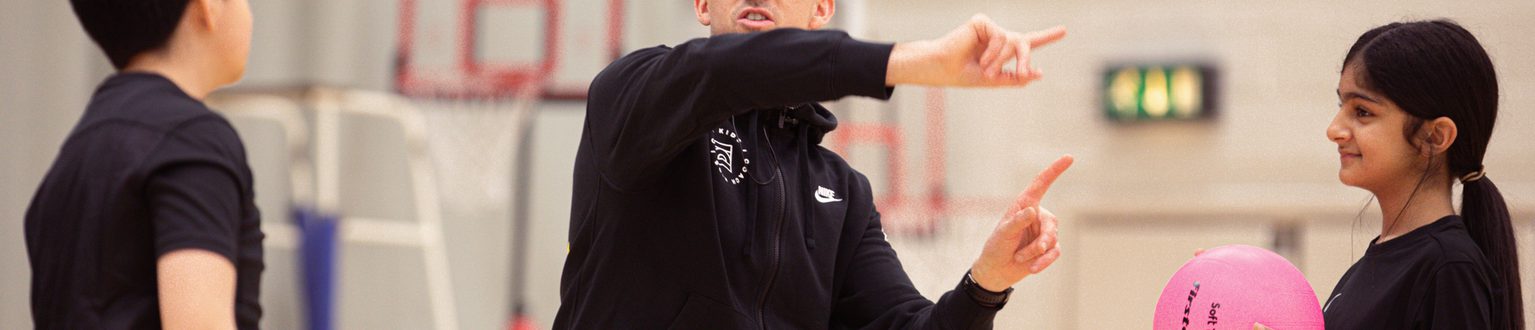
Adapting your coaching to children at different ages, stages and abilities is essential to making sure that children have positive experiences of sport and physical activity.
The STEP model focuses on four elements that can be changed to make an activity easier, harder, or more inclusive: Space, Task, Equipment, and People. By modifying one or more of these elements, a coach or teacher can create an environment where all participants remain challenged yet capable of taking part.
Space
This refers to the physical area where an activity takes place. Adjusting the space can significantly change the level of difficulty. For example, increasing the size of a playing area can give participants more time and room to move, making a task easier. Reducing the space can increase pressure, encouraging quicker decisions and improving skill development. Coaches can also change the shape of the area or add zones to focus on specific skills or tactics.
Task
The second element, Task, involves altering the rules or objectives of the activity. This could mean simplifying instructions, breaking a skill into smaller steps, or adding new challenges once players have mastered the basics. For instance, a coach might allow extra touches on the ball or remove time restrictions to help beginners succeed. Conversely, advanced players might face additional rules that require faster thinking or more precise execution. Adjusting the task ensures that participants stay engaged and continue progressing.
Equipment
Equipment is the third component of the model. Changing the type, size, or quantity of equipment can dramatically affect how accessible an activity is. Using lighter balls, larger targets, or modified equipment can make it easier for beginners or younger participants to succeed. As skills improve, coaches can gradually introduce standard equipment or add new tools to increase complexity. Equipment modifications are particularly helpful when working with mixed-ability groups, as they allow everyone to participate in the same activity at an appropriate level.
People
The final element, People, focuses on how participants are grouped or involved in the activity. Coaches might pair individuals with similar abilities, mix experienced and inexperienced players, or change team sizes to influence the dynamics of the game. Smaller groups can increase participation and provide more opportunities to practice, while larger groups can introduce teamwork and strategic challenges. Adjusting the people involved helps ensure that all participants feel included and supported.
Overall, the STEP model provides a simple yet powerful approach for creating inclusive and effective learning environments. Instead of designing entirely different activities for different skill levels, coaches and educators can adapt a single activity by modifying space, task, equipment, or people. This flexibility allows sessions to remain engaging, accessible, and developmentally appropriate for everyone involved.
By applying the STEP model, instructors can maintain a balance between challenge and success, which is essential for motivation and skill development. The approach encourages creativity, adaptability, and inclusion, making it a valuable tool in both sports coaching and broader educational settings.
Watch the video below, presented by Sheelagh Quinn of Sport Ireland to dive even deeper into the STEP model.


